Every growing wholesale or distribution business eventually faces the same question: when is it time to bring B2B sales online? The answer depends less on technology readiness and more on operational pain: when manual order processing can’t keep up, when sales reps spend more time on routine reorders than on relationships, or when customers start expecting self-service.
B2B eCommerce is different from B2C, though. While B2C revolves around individual consumers, fixed pricing, and instant payments, B2B is built around organizations, with negotiated pricing, contractual agreements, purchasing hierarchies, and long-term relationships. A single “customer” can represent an entire company with multiple departments, users, permissions, and approval workflows.
This post walks through the building blocks every B2B online store needs to get right: ERP integration, company account structures, customer-specific pricing and catalogs, payment terms, ordering workflows, and sales team integration.
Making the Shift: What B2B eCommerce Starting Point Should Require
Once the decision to go B2B is made, the instinct is often to start with technology – pick a platform, build an online store, go live. But B2B eCommerce is as much an organizational effort as it is a technical one.
Before any implementation starts, you need clarity on how your business actually operates. How are customer agreements structured? Who approves orders, both on your side and on the customer’s? What pricing logic lives in your ERP, and how much of it needs to surface in the online store? How will the sales team work with the new channel?
These are business questions that determine the shape of everything that follows. Getting this right means treating the online store not as a standalone project, but as a layer over your existing business operations. The building blocks described below are what that layer needs to support.
ERP Is the Backbone of B2B eCommerce
In B2B eCommerce, integration with the ERP system is not optional. It is essential. Your ERP holds everything that drives the business: customer agreements and pricing, product data and availability, order processing and invoicing, and financial and credit information.
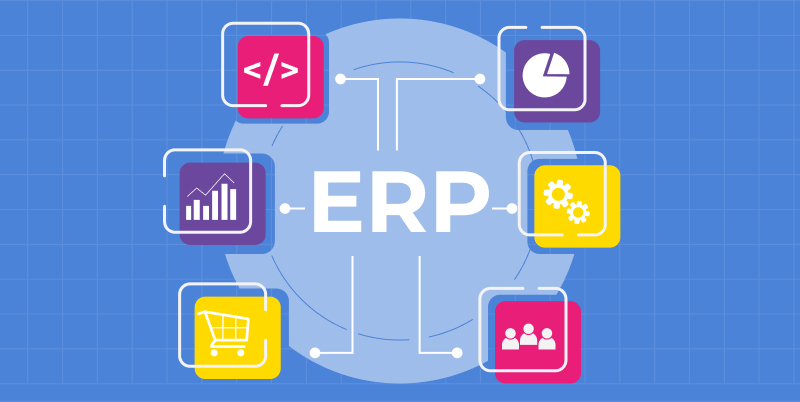
Without deep ERP integration, a B2B online store cannot function properly. Pricing becomes inconsistent, stock becomes unreliable, and orders become disconnected from real business processes.
That’s why, before introducing B2B functionality, merchants need to ensure their ERP contains accurate and structured data, supports customer-specific logic, and can integrate reliably with the online store.
In most successful B2B setups, the online store is simply a digital extension of the ERP, which acts as the single source of truth.
The Essential Building Blocks of B2B eCommerce
While B2B systems can become highly complex, there are several core capabilities every B2B online store must support. As with ERP integration, these are not optional. They are foundational.
1. Company Accounts and Organizational Structures
In B2B, you sell to a company, not a person. That means the purchasing process often involves a range of departments, roles, and approval stages. Your online store must support company profiles with multiple users under one account, individual permissions and responsibilities per user, and organizational hierarchies (headquarters, branches, departments).
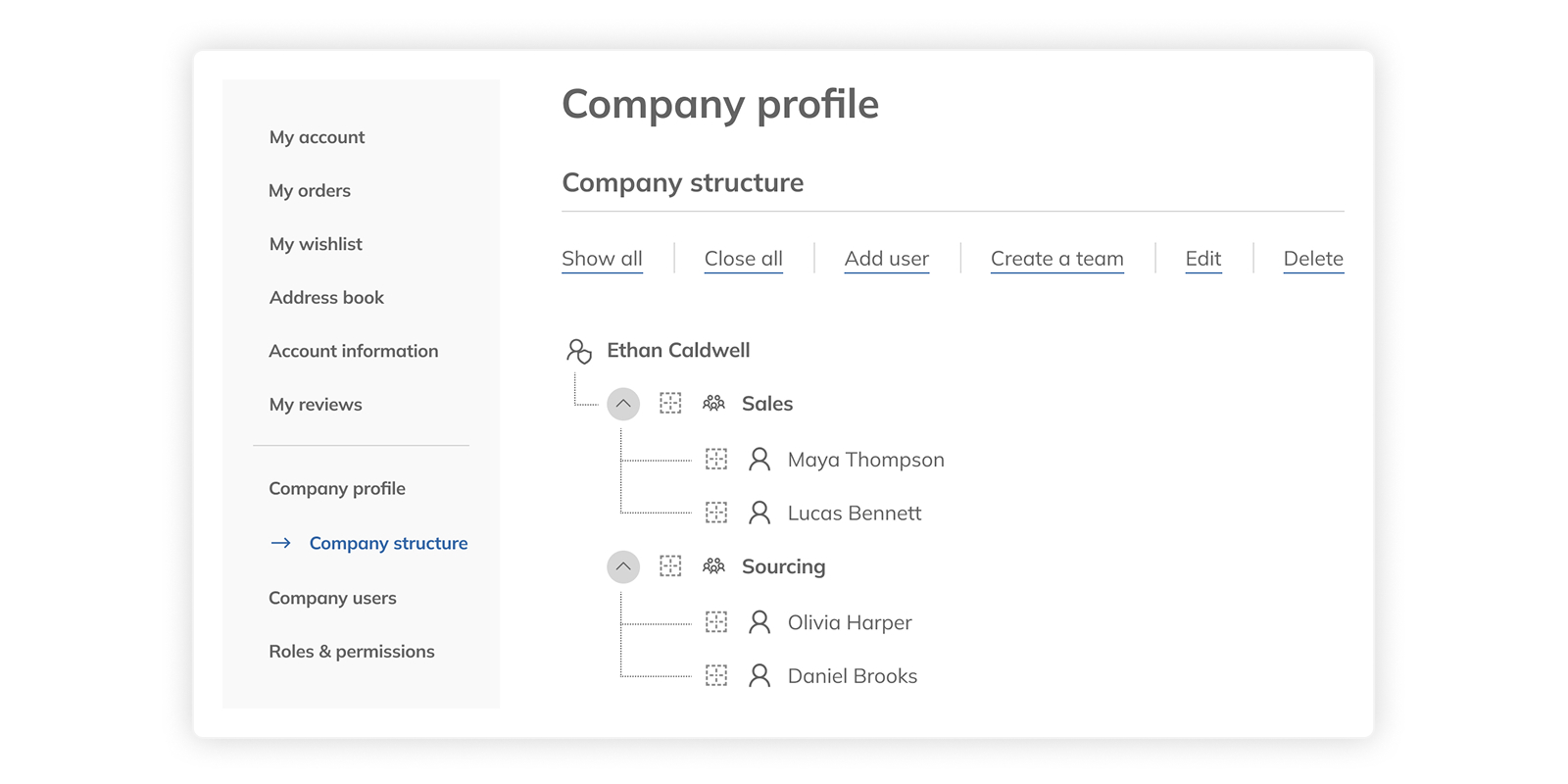
Purchasing in B2B is rarely a single-step action. Different users have different responsibilities: buyers placing orders, managers approving them, and finance teams overseeing spending. Each company may have dozens of users interacting with your platform in different ways.
To support this, your online store needs role-based access controls, spending limits, and approval workflows. Without these, many B2B customers simply won’t be able to use your platform.
2. Customer-Specific Catalog, Pricing, and Contracts
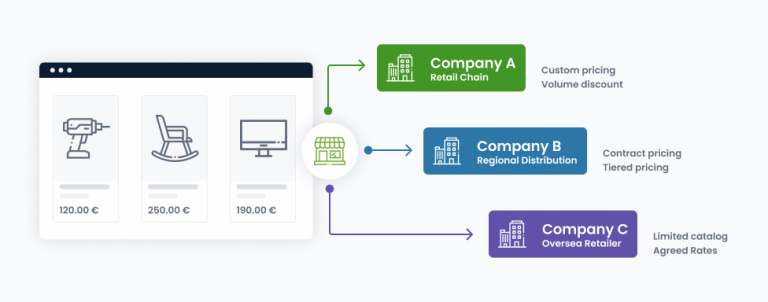
Unlike B2C, B2B pricing is rarely standardized. Prices can vary based on individual customer agreements, order volumes, long-term contracts, and market conditions. A B2B online store must support price lists per customer or customer group, tiered and volume-based pricing, and contract pricing with negotiated discounts.
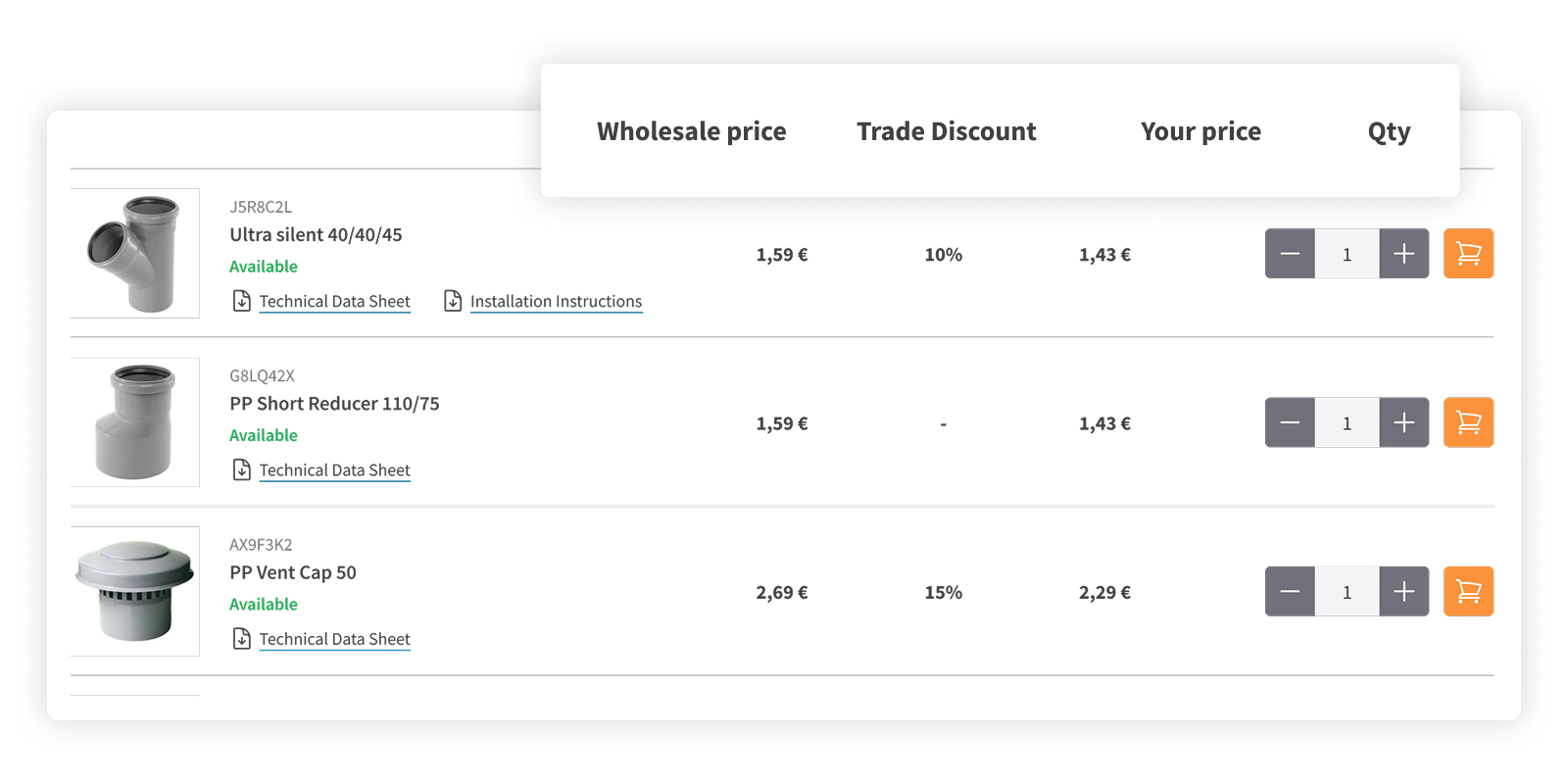
The product catalog itself often needs to be customized per customer as well. B2B businesses frequently operate with customer-specific assortments, restricted products, and market or contract-based catalogs. Your online store must be able to control which products are visible to which customers, and how they are presented per segment, to ensure each customer sees a relevant and accurate offering.
This is one of the most critical and technically demanding aspects of B2B eCommerce.
3. Payment Terms and Credit Management
B2B transactions are built on trust and long-term relationships. Unlike B2C, where payment happens at checkout, B2B customers often work with invoice payments (net 30 or net 60 days), agreed credit limits, and purchase order (PO) numbers.
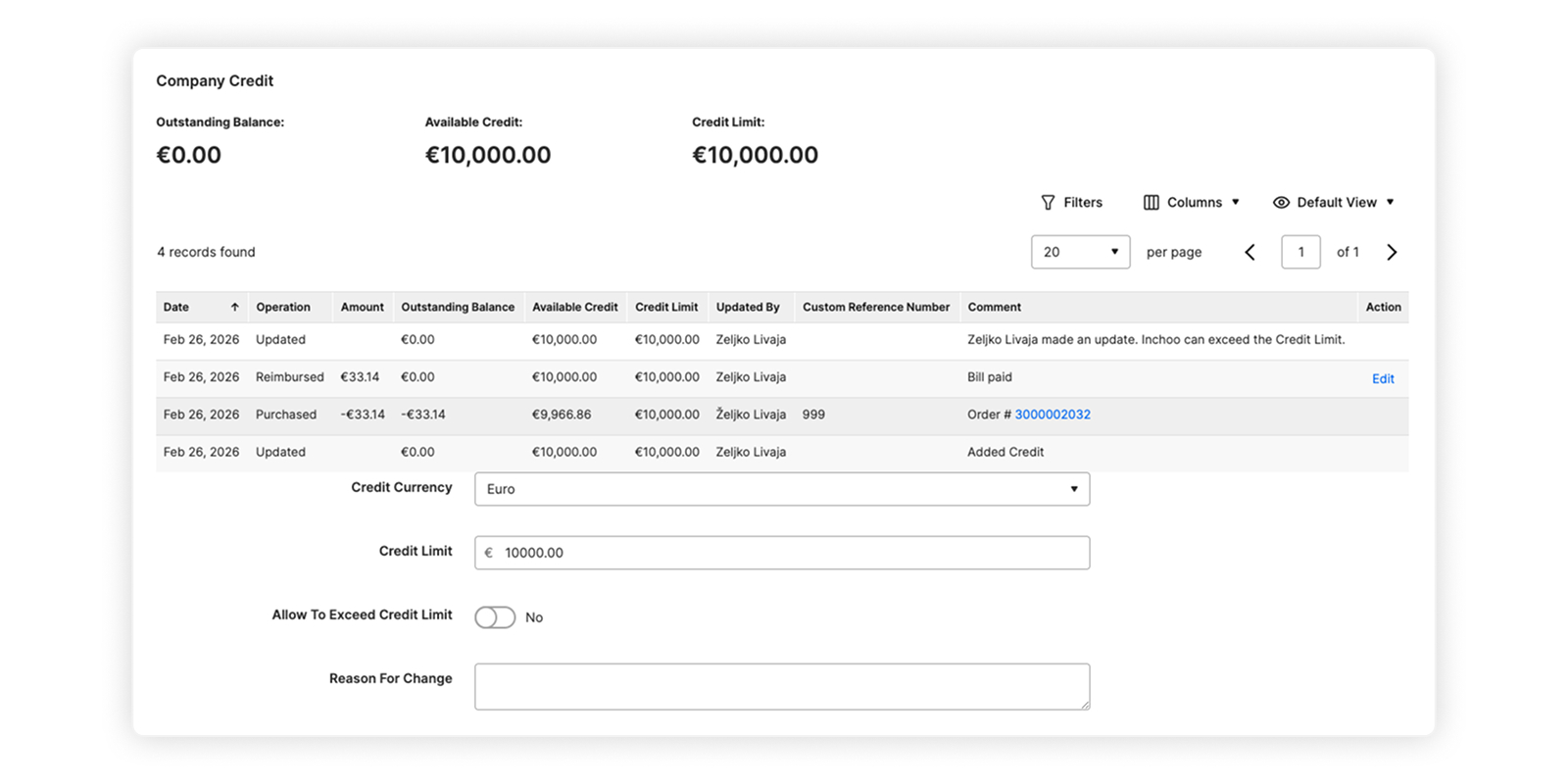
Beyond standard payment methods, your online store needs to support flexible payment terms, credit validation, and integration with financial systems. This is another area where ERP integration is critical, as financial data must remain consistent across all systems.
4. Efficient Ordering Workflows
B2B buyers know exactly what they need. Browsing and discovery take a back seat to speed and efficiency. The key features to support this are:
- Quick order by SKU
- Bulk ordering (including CSV upload)
- Reordering from previous purchases
- Saved carts or order templates
- Requisition lists for recurring or team-based orders
- RFQ (Request for Quote) for negotiated or custom pricing
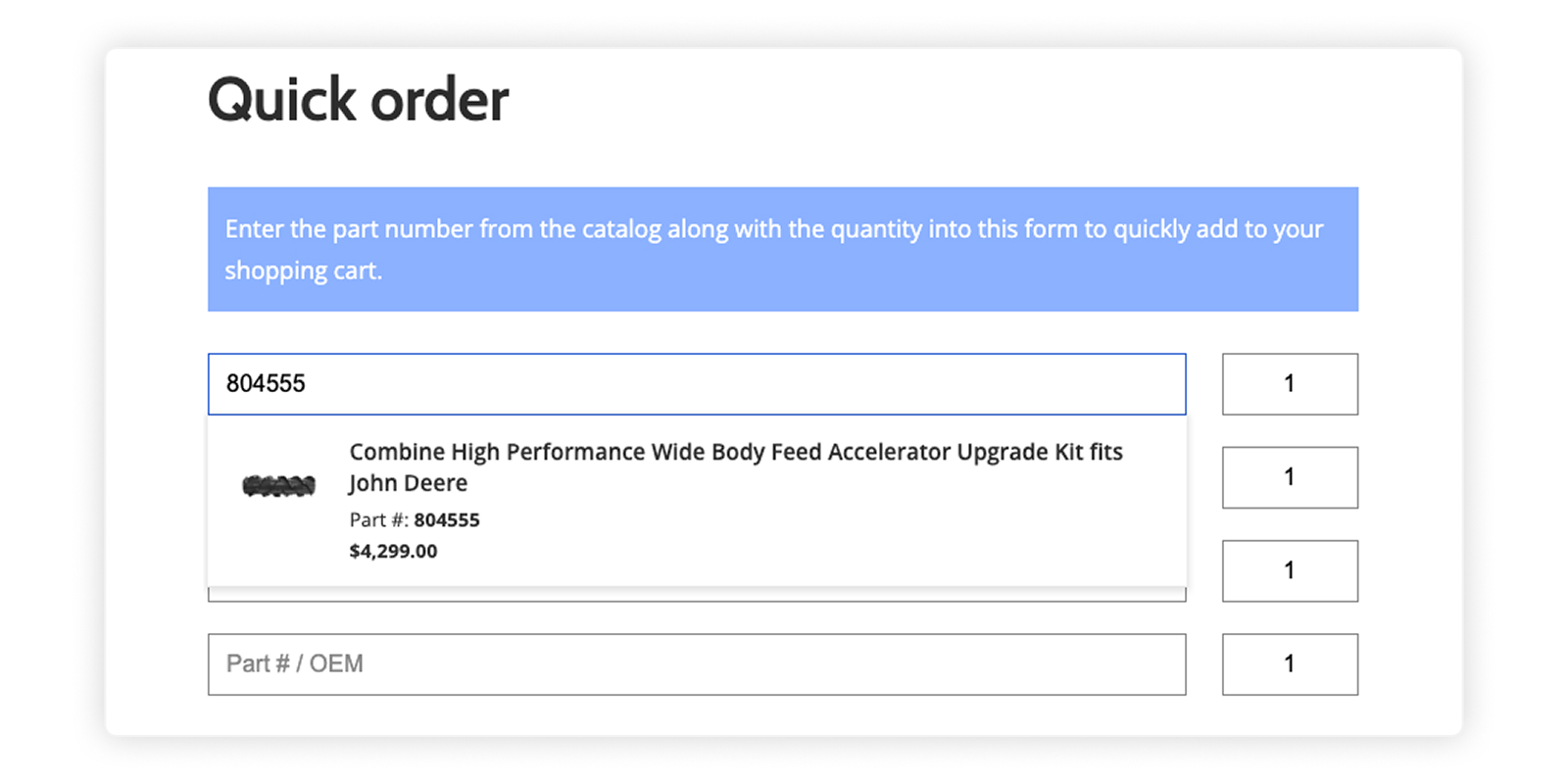
A good B2B online store reduces friction and allows customers to complete complex orders quickly.
5. Sales Team Integration
Many B2B businesses rely heavily on sales representatives, and introducing an online store without a clear strategy for the sales team can create unnecessary friction. You need to define how the online store supports the sales team: whether sales reps can place orders on behalf of customers, and how relationships and commissions are managed.
The goal is to enhance and support your sales process, not to replace it.
Where to Go from Here
The building blocks covered in this post (ERP integration, company accounts, customer-specific pricing, payment terms, ordering workflows, and sales team integration) are the minimum for a functioning B2B online store. In practice, B2B systems often go further, into areas like advanced logistics, tax handling, and customer-specific workflows.
But the starting point is always the same: understanding how your business operates today and deciding how much of that should surface online. The technology choices matter, but they come second. The companies that get B2B eCommerce right are the ones that treat it as an extension of their existing operations, not a separate project.
If the operational pain is there and self-service expectations from your customers are growing, the question isn’t whether to go B2B online, but how to do it in a way that fits your business. Choosing the right platform, architecture, and implementation partner is what makes that work long-term.
If the shift to B2B eCommerce makes sense for your business, drop us a line. We’re here to help you get it right.