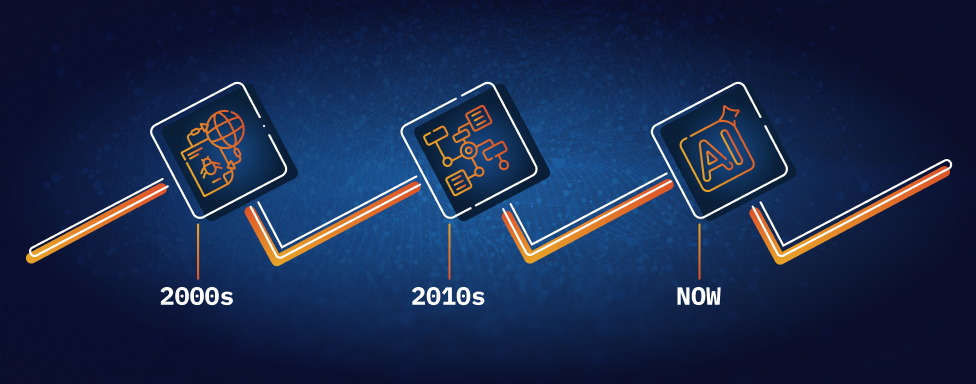
Remember when robots.txt became essential for SEO? Or when structured data markup transformed how search engines understood your products? We’re now witnessing the emergence of another web standard, one designed not for traditional search engines, but for the AI assistants that are rapidly becoming your customers’ preferred shopping companions.
Meet llms.txt: a simple file that could fundamentally change how AI understands and represents your online store.
The Problem: LLM Can’t Really “See” Your Store
Here’s an uncomfortable truth for eCommerce merchants: when a customer asks ChatGPT, Claude, or any AI assistant about products in your store, that AI is essentially fumbling in the dark.
Large language models face a fundamental limitation when trying to understand websites. Context windows (the amount of information an LLM can process at once) are simply too small to handle most eCommerce sites in their entirety. Your carefully crafted product pages, with their navigation menus, promotional banners, JavaScript widgets, and footer links, become a tangled mess when an AI tries to extract meaningful information.
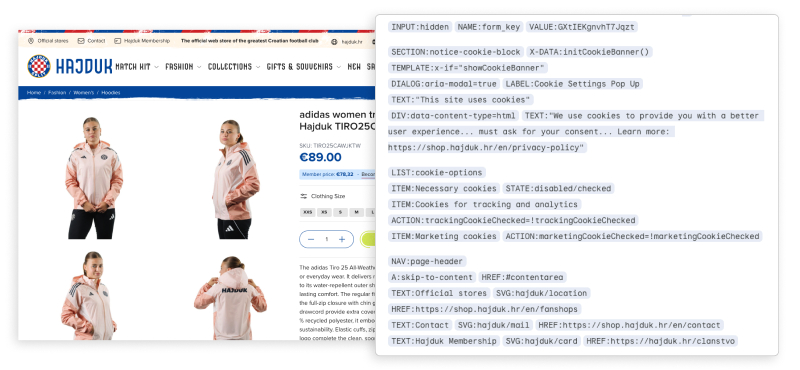
The result? AI assistants either provide vague, generic answers about your products or, worse, confidently share inaccurate information. Neither scenario helps your business.
Meet llms.txt: A Standardized Way to Speak to AI
Proposed by Jeremy Howard in September 2024, llms.txt is elegantly simple: a markdown file placed at the root of your website (yourstore.com/llms.txt) that provides AI-friendly content about your business.
Think of it as a structured introduction to your store, written specifically for artificial intelligence. While your website speaks to human visitors through visuals and interactive elements, llms.txt speaks to AI in the clean, concise language it understands best.
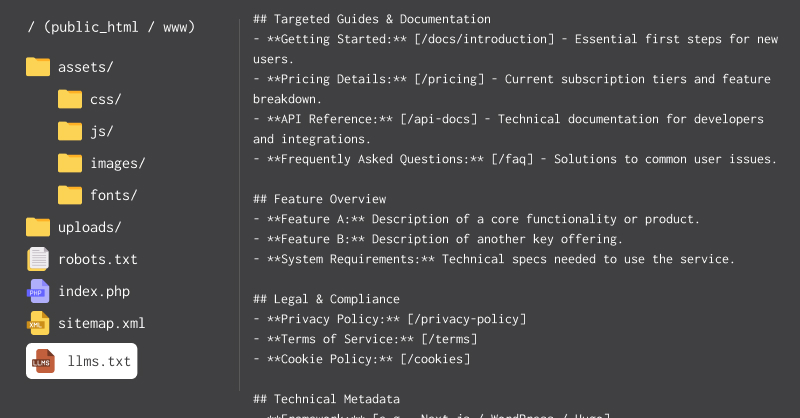
The file follows a straightforward format: a title, an optional description, key information about your business, and organized links to detailed content. It’s both human-readable and machine-parseable, a bridge between your traditional web presence and the AI-powered interfaces that increasingly mediate customer interactions.
AI Discoverability Is the New SEO
Just as search engine optimization changed how customers find products online, AI optimization is emerging as the next competitive battleground. When a potential customer asks an AI assistant aproduct-related question(e.g. ‘What’s a good running shoe for flat feet under $150?’), you want your products in that conversation.
With a well-structured llms.txt file, AI systems can accurately understand your product catalog, pricing tiers, unique selling propositions, and expertise areas. Instead of generic responses, AI assistants can provide specific, accurate recommendations that include your products with correct details about features, pricing, and availability.
Automated Customer Support
One of the most immediate benefits is the potential to reduce the burden on customer support. AI chatbots, whether integrated into your site or accessed through general-purpose assistants, can accurately answer product questions when they have access to structured information about your store.
Imagine customers getting instant, accurate answers to questions like: “What’s your return policy on electronics?” or “Which of your coffee makers is compatible with K-cups?” When AI has access to clear, organized information about your products and policies, these interactions happen without human intervention. That leaves your support team free to focus on complex issues that genuinely require human judgment.
Content Prioritization that You Control
Unlike search engine crawlers that index everything they find, llms.txt gives you explicit control over what information AI systems prioritize. You decide which products, categories, and pages matter most for AI interactions.
Launching a new product line? Highlight it in your llms.txt. Want AI to emphasize your premium offerings over budget options? Structure your file accordingly. Running a seasonal promotion? Update your llms.txt to reflect current priorities.
This level of control is unprecedented in how businesses communicate with automated systems. You’re not just hoping an algorithm surfaces the right information; you’re explicitly curating what AI knows about your business.
Multi-Store and Multi-Language Efficiency
For merchants operating multiple storefronts or serving international markets, llms.txt offers remarkable efficiency. A single configuration strategy can manage how AI perceives your brand across all store views, ensuring consistent representation whether a customer in Germany asks about your products in German or a customer in Japan inquires in Japanese.
The structured format also makes translation and localization straightforward. Your AI-facing content can be maintained as systematically as your human-facing content.
Practical Implementation for eCommerce
So what does an eCommerce llms.txt actually look like? While implementation details will vary by platform and business, a typical structure might include:
- A brief description of your store and brand positioning.
- Key information about what makes your business unique (your specializations, target audience, and value propositions).
- Organized sections linking to your main product categories, with notes about what each contains.
- Links to essential policy pages (shipping, returns, warranty) that AI assistants frequently need to reference.
- Optional sections for secondary information, like your company history or community involvement.
The beauty of the format is its flexibility. A boutique specialty retailer might emphasize curation and expertise, while a large marketplace might focus on breadth of selection and competitive pricing. Your llms.txt reflects your brand’s identity in a format AI can understand.
The Automation Advantage
Perhaps the most compelling aspect of llms.txt for eCommerce is the potential for automated maintenance. Your product catalog changes constantly: new arrivals, discontinued items, price adjustments, inventory fluctuations. Manually maintaining AI-facing content would be impractical at scale.
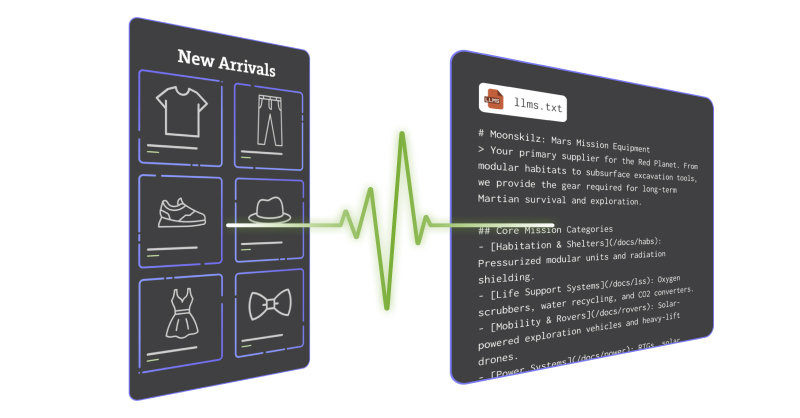
Forward-thinking eCommerce platforms are beginning to build automated llms.txt generation into their systems. The vision is straightforward: as your catalog changes, your llms.txt regenerates automatically on a scheduled basis, keeping AI-facing content synchronized with your actual inventory and offerings.
This automated approach transforms llms.txt from a one-time optimization project into an ongoing, maintenance-free system that keeps AI assistants current on your latest products and promotions.
The Competitive Window
We’re in an interesting moment. The llms.txt specification is new enough that adoption remains limited, yet usage of AI assistants is growing rapidly. At the same time, customers increasingly rely on AI for product research, recommendations, and purchase decisions.
Merchants who implement llms.txt now position themselves ahead of competitors who haven’t yet recognized the importance of AI-readable content. When a customer asks an AI assistant for recommendations in your product category, the merchants with clear, structured information available will be mentioned. Those without may be invisible.
This competitive window won’t remain open indefinitely. As awareness grows, llms.txt adoption will accelerate. The question isn’t whether your competitors will implement this standard, it’s whether you’ll be ahead of them or playing catch-up.
Looking Forward
The web is evolving. Traditional search, while still important, is increasingly supplemented by AI-mediated discovery. Customers don’t just search for products anymore; they ask AI assistants for advice, recommendations, and answers.
llms.txt represents a practical, implementable way to ensure your eCommerce business participates in this shift. It’s not about replacing your existing SEO efforts or website optimization. It’s about adding another layer, one that speaks directly to the AI systems that are becoming powerful intermediaries between your products and your potential customers.
The robots.txt file helped businesses communicate with search engine crawlers. Structured data helped search engines understand product information. Now, llms.txt is emerging as the standard for communicating with AI assistants.
Ready to Make Your Store AI-Readable?
AI assistants are already your customers’ shopping companions: giving recommendations, answering questions, and shaping their purchase decisions. Now’s the time to make sure your online store is part of that conversation.
If you run a Magento store and want to make it AI readable and understandable, contact us to implement llms.txt. Our team will help you create a structured, automatically maintained llms.txt file that ensures AI assistants accurately understand and recommend your products.