Not every B2B transaction starts with a price. For instance, a buyer might need 5,000 units of a product they’ve never ordered in that volume before. Or they’re sourcing something custom, something bundled, or something tied to a project with specific delivery requirements. In these situations, nobody reaches for a checkout button. They pick up the phone or send an email.
That gap, between browsing and ordering, is where the Request for Quote process lives. And in most B2B businesses today, it still runs entirely on manual communication: email threads, spreadsheets, phone calls, and handwritten notes passed between sales reps. It works, until it doesn’t. Quotes get lost. Response times stretch. There’s no audit trail. The customer doesn’t know where they stand.
Moving RFQ online doesn’t just clean up that mess. Instead, it turns a friction heavy back channel into a structured, trackable sales process. And that’s not a convenience improvement. It’s a competitive one.
Why RFQ Exists in B2B
B2B sellers rarely set fixed prices. Even when there’s a price list, it’s often just the starting point. In practice, actual prices depend on volume commitments, long term contracts, the buyer’s relationship with the business, delivery terms, and market conditions. To illustrate, a buyer ordering 10 units pays a different price than one ordering 1,000.
Beyond that, some products simply don’t have a listed price. Custom items, project-based orders, bundled offers, or products with variable specifications don’t fit into a catalog line. In those cases, the quote is the product.
There’s also an important dynamic on the buyer’s side. Specifically, large purchases typically require internal approval, because a procurement manager can’t authorize a significant spend on the basis of a verbal agreement.
In particular, they need a formal, written quote with clear terms, a validity period, and an itemized breakdown. The RFQ process gives them what they need to move the purchase through their own organization.
Meanwhile, for sellers, the quote is both a sales opportunity and a pricing decision. It’s the moment where seller and buyer negotiate volume, margin, and customer value. Doing that well, consistently and at scale, requires a process, not just goodwill.
The Online RFQ Process
A properly designed online RFQ system follows a clear lifecycle. While implementations vary, the core flow looks like this:
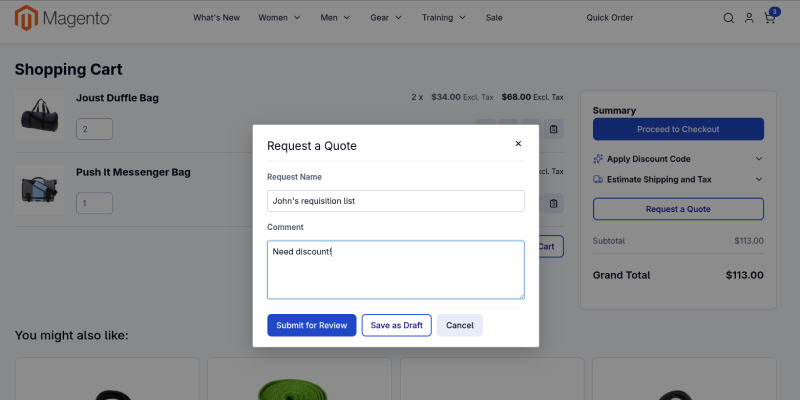
The buyer submits a quote request. They select products from the catalog (or enter SKUs directly), specify quantities, add notes about delivery requirements or special conditions, and submit. Some systems allow file attachments, for example a bill of materials or a technical specification.
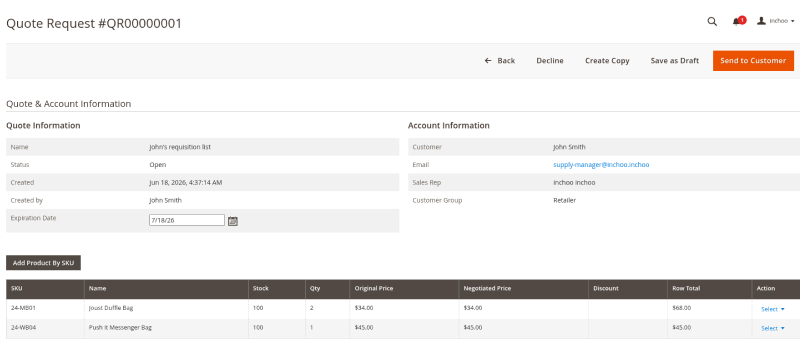
Next, the seller reviews the request. The request lands in an internal dashboard where the team can assign it to a sales rep, review it, and process it. The seller sees exactly what the buyer requested, in what quantities, and with what notes attached.
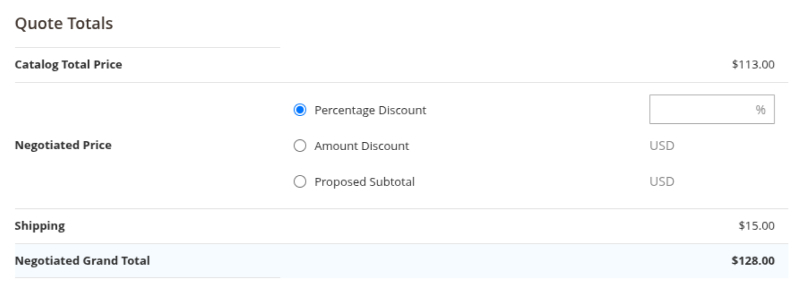
Then, the seller responds with a quote. They set prices per line item, add comments, define a validity period for the offer, and send it back. This is where the seller applies negotiated pricing, custom terms, or any special conditions.
In turn, the buyer reviews the offer. They can accept it, decline it, or, in more capable systems, submit a counteroffer with revised quantities or a note requesting adjusted pricing. This creates a structured negotiation thread, not an email chain.
Finally, the accepted quote converts to an order. Once the buyer accepts, the quote becomes a sales order automatically, without reentry, without the sales rep needing to do anything manually. The ERP picks it up from there.
Key Components of an Online RFQ System
For this process to work well, several components need to be in place and working together.
Quote request form. The entry point for the buyer. It should support product selection from the catalog, direct SKU entry for buyers who know exactly what they want, quantity specification, and a free text field for notes. Attachments and desired delivery dates are common additions for more complex orders.
Seller review dashboard. This is where the sales team works. Incoming requests should be visible, assignable, filterable by status, and actionable, meaning the rep can respond, add pricing, and send the quote from a single interface, not by switching between systems.
Pricing controls. Specifically, the seller needs to be able to set a price per line item that differs from the standard catalog price. This can include custom discounts, negotiated rates, or pricing that reflects volume. But these overrides should be deliberate and logged, not ad hoc.
Validity and expiry. No quote stays open indefinitely. Every quote should carry an expiry date, and the system should enforce it, meaning the buyer cannot accept an expired quote without a new negotiation.
This protects the seller’s pricing decisions and creates urgency on the buyer’s side.
Negotiation thread. For complex deals, one exchange is rarely enough. A good RFQ system supports multiple rounds: the buyer can respond to a quote with a counteroffer, the seller can revise and resubmit, and the system preserves the full history of the exchange.
This creates a transparent, documented negotiation. Nothing falls between the cracks.
One click conversion to order. When the buyer accepts, the transition from quote to order should be seamless. No reentry, no manual steps. The system creates the order with the exact products, quantities, and prices from the accepted quote.
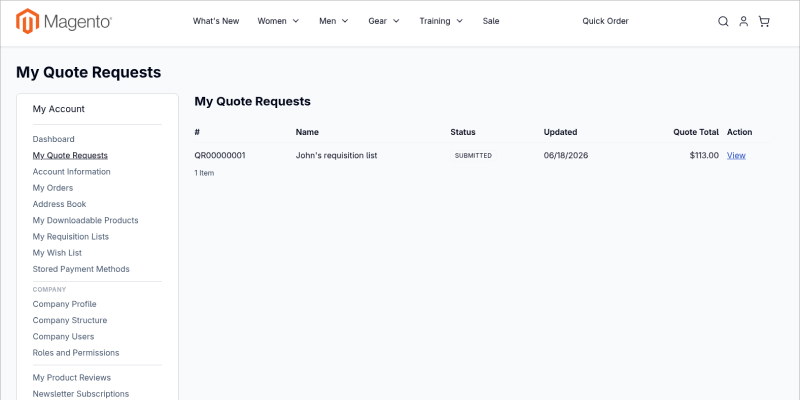
Buyer account history. Buyers should be able to see all their quote requests, whether open, pending, accepted, or expired, directly in their account. This gives them control over their own purchasing process without needing to call someone to ask for an update.
Notifications. Crucially, status changes need to trigger email alerts. Buyer submits a request → seller is notified. Seller sends a quote → buyer is notified. Quote approaching expiry → the buyer gets a reminder. These touchpoints keep the process moving without requiring manual follow up.
Benefits for Both Sides
For buyers, the shift to online RFQ primarily means control and visibility. As a result, buyers know where their request stands at all times. There’s a documented offer to present for internal approval. No more chasing a sales rep to find out if a quote is coming. And when they’re ready to proceed, accepting and ordering takes seconds.
For sellers, the benefits go further. The system captures and tracks every request, so there’s no such thing as a lost enquiry because someone forgot to forward an email.
Beyond that, sales reps work from a dashboard rather than an inbox, which means they can manage volume and prioritize effectively. Equally important, the seller makes pricing decisions deliberately and documents them, which matters both for consistency and for any audit or dispute.
The conversion from accepted quote to order is automatic, eliminating a category of manual work entirely.
Over time, the data is also valuable. Knowing what customers request, how often they accept the initial offer versus negotiating, and where quotes tend to expire gives a clearer picture of pricing performance and customer intent than email threads ever could.
RFQ as a Strategic Capability
It’s worth stepping back from the process and recognizing what RFQ represents at a higher level. For many B2B businesses, high value and complex orders are the most important ones. They’re where the margins are, where the relationships are deepest, and where the most is at stake. Running that process through informal channels like email, phone, and spreadsheets is a real risk at scale.
An online RFQ capability signals something to customers: that you can handle their needs formally, reliably, and professionally. Indeed, it’s one of the things that distinguishes a B2B webshop from a B2C webshop with a price list.
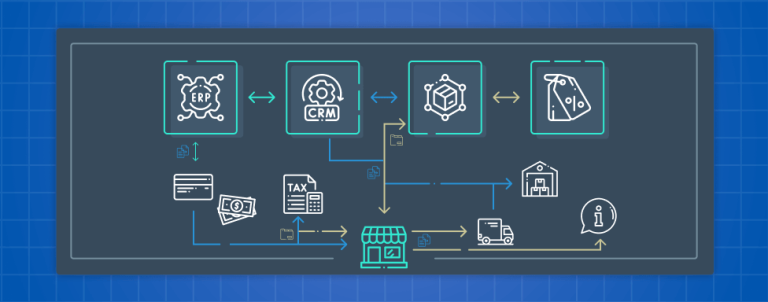
It also connects directly to ERP integration. In a fully integrated setup, approved quotes flow into the ERP as orders, pricing from the ERP informs what the sales rep proposes, and the full lifecycle, from request to invoice, is traceable across systems.
Where RFQ Fits in the B2B Journey
Not every B2B webshop needs RFQ from day one. If your catalog carries fixed prices, orders are simple, and customers don’t negotiate, the standard checkout flow works fine. But as business complexity grows, with larger deals, more customization, and more procurement conscious buyers, the cost of not having a structured quote process becomes real and measurable.
Beyond that, an online RFQ capability signals something to customers: that you can handle their needs formally, reliably, and professionally. In fact, it’s one of the things that distinguishes a B2B webshop from a B2C webshop with a price list.
The previous post in this series described the foundational building blocks of B2B eCommerce. RFQ is one of the capabilities that sits on top of those foundations and takes a B2B webshop from functional to genuinely competitive. It’s not the most visible feature, but the moment a customer needs it and finds it missing, they know.
In B2B, the ability to negotiate is not the exception. For many businesses, it’s the rule. So your webshop should be able to support that.