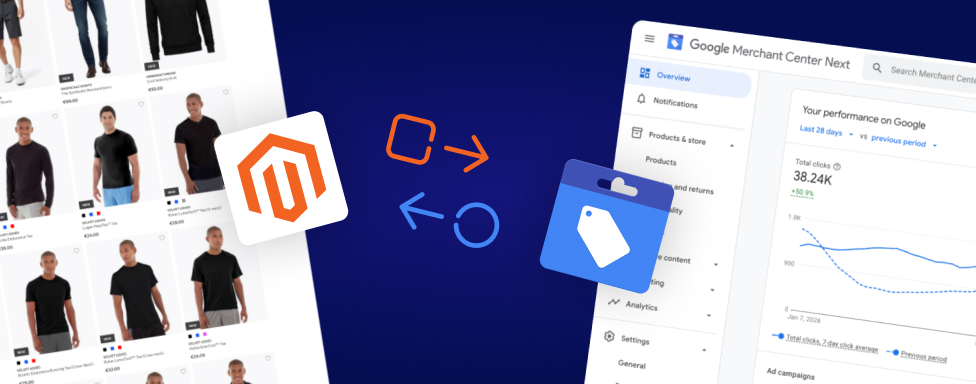
If you sell products through Google Shopping or promote them via Google Ads, you are likely using product feeds: XML or CSV files that sync your catalog to Google Merchant Center. While feeds work well for many merchants, there is a powerful alternative: the Merchant API.
The main difference is the update frequency. Feeds operate on schedules, typically once or twice daily. The API allows on-demand updates, often within minutes. Depending on how frequently your prices or inventory change, that can be a major advantage.
This post explains what the API does, where it helps, and when feeds remain a reasonable choice.
Your Catalog’s Broader Impact
The product data you submit to Merchant Center doesn’t appear in just one place; it flows across multiple Google surfaces.
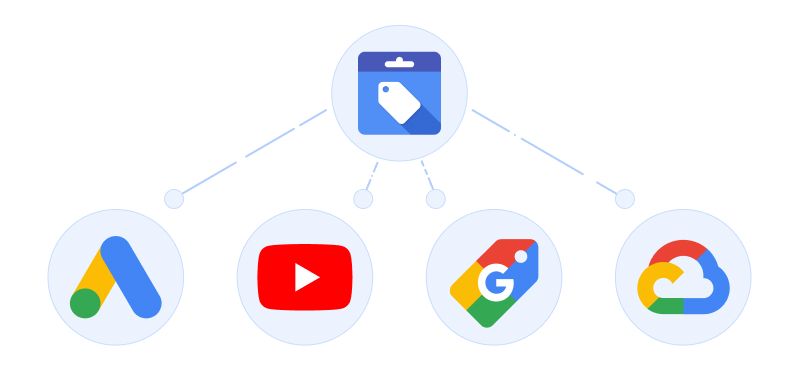
Shopping ads pull product titles, images, prices, and availability directly from Merchant Center. Free product listings show your products in Google Shopping, Search, and Images. Local inventory ads display products available at physical store locations. YouTube Shopping can display your products alongside video content.
One catalog serves all these channels. When your data shows incorrect prices, outdated stock, or disapproved products, those problems ripple across paid ads, free listings, and every connected surface. This makes timely updates essential, but traditional product feeds often struggle to keep up.
Faster Updates = Accurate Inventory
The main limitation of feeds is timing. You generate a feed, upload it, and wait for processing. Between updates, your listings show whatever was in the last feed, even if the inventory has changed.
For example, a product sells out at 10 AM, but your feed doesn’t refresh until the evening. Meanwhile, Google continues to show that product in ads and listings. You pay for clicks that can’t convert and potential customers leave frustrated.
The API allows updates when changes happen. If stock sells out, you can update Google within minutes. Price adjustments? The same applies. Because Merchant Center feeds all downstream channels, faster updates improve accuracy everywhere your products appear. With the right integration, this process can happen automatically without manual intervention.
How much this matters depends on your business. Stable inventory with infrequent price changes? Daily feeds work fine. Fast-moving stock or dynamic pricing? Quicker sync cycles deliver real value.
Surgical Updates and Better Error Handling
Traditional feeds work as complete snapshots: changing one product’s price means regenerating your entire catalog. The API allows partial updates: adjust just the price field for a single SKU, or update availability for a specific product, without affecting the rest.
This reduces the risk of unintended overwrites, a common issue where one feed upload can unexpectedly affect data from another source. For retailers with physical stores, the API supports location-specific inventory updates, so local inventory ads reflect what’s actually available at each location.
Error handling also sees improvement. With feeds, you typically discover problems by checking Merchant Center after processing, often hours later. The API supports push notifications when the product approval status changes. You receive alerts rather than discovering disapprovals the next morning.
Automation and Additional Capabilities
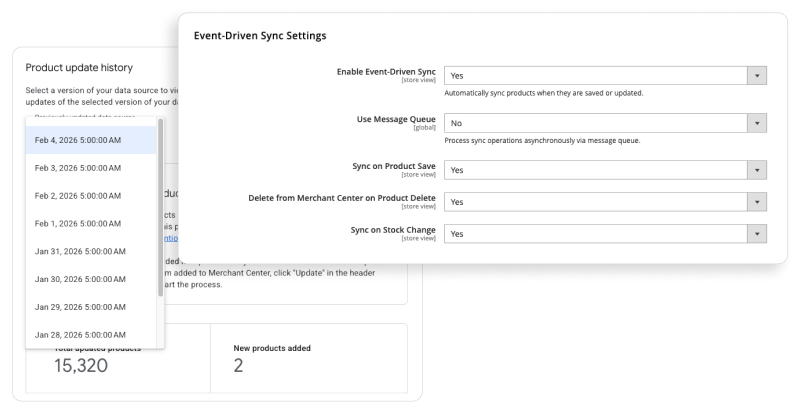
Feeds run on schedules regardless of what’s happening in your business. The API enables event-driven updates: your inventory system triggers a Google update when stock changes, pricing tools push new prices immediately, promotions go live across all Google surfaces when they launch on your site.
PS. We’ve built these automation capabilities into our solution, so your Magento store stays in sync without ongoing development work.
The API also provides capabilities unavailable through feeds. Supplemental data sources let you add enhanced descriptions or images separately from your primary feed. The Promotions API allows programmatic management of sales and special offers. Product performance data (impressions, clicks, competitive metrics) is accessible for custom reporting.
Google has indicated that new features will launch for the API first. Feeds won’t stop working, but merchants using the API will have earlier access to new capabilities.
Where API Helps Most and Where Feeds Work Fine
The API offers the greatest advantage in situations such as:
- Fast-moving inventory with frequent stockouts
- Frequent price changes based on competition or demand
- Time-sensitive promotions
- Multiple store locations requiring location-specific stock data
- Large catalogs with regular modifications
- Significant investment in Shopping or Performance Max campaigns
Feeds remain a practical option when:
- Catalogs are small, under a few thousand products with infrequent changes
- Products rarely go out of stock
- Pricing is stable
- Current feed setup works without data accuracy issues
There’s no requirement to move to the API. Google still fully supports XML and CSV feeds with no announced deprecation. The question is whether faster updates would improve your results, and whether you have a practical way to implement API integration. For merchants where data accuracy directly affects ad spend efficiency and conversion rates, the investment tends to pay for itself.
Content API is Being Retired

If your store uses the Content API for Shopping, note that Google is shutting it down on August 18, 2026. After that date, Content API integrations stop working.
The Merchant API serves as the replacement. It’s a redesign with a different structure, so migration requires updating how your integration is built, not just changing endpoints. Both APIs can run simultaneously during transition, so you can migrate gradually.
Moving to Google Merchant API
Historically, using the Merchant API required custom development: building an integration, handling authentication, managing quotas. This put API benefits out of reach for merchants without development resources.
For Magento merchants, we’ve removed those barriers. Our Merchant API integration is built specifically for Magento stores, giving you access to real-time updates, partial syncs, and automation capabilities without a lengthy development project.
If you’re running a Magento store and want to move to Google Merchant API, get in touch. We’ll guide you through how our solution works and determine if it aligns with your business needs.