Once dominated by catalogs, phone orders, and sales representatives, B2B eCommerce has steadily moved online over the past decade. But the people placing those orders spend their personal time on modern platforms such as Amazon and Airbnb – and they notice the difference. The gap between these experiences has become impossible to ignore, leaving many customers frustrated by outdated and overly complex B2B interfaces.
B2B Lags Behind B2C in Usability
For years, B2B platforms lagged behind B2C in usability and design. While consumer apps became faster and more intuitive, many B2B systems remained complex and outdated. This gap was shaped by relationship-driven sales models, legacy technology, lower digital competition, and the long-held belief that business users would accept complexity in exchange for functionality.
The Consumerization of the B2B Buyer
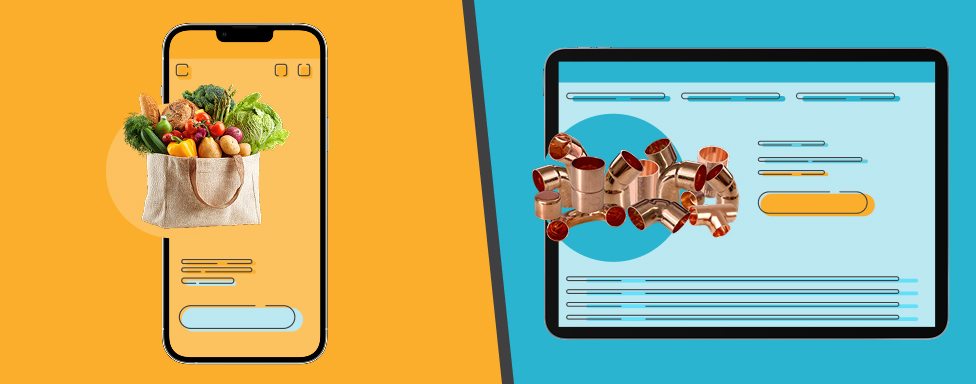
The surge in B2B expectations is driven by a simple reality: the person buying industrial valves at 9:00 is the same person who ordered groceries on an app at 7:00. Many B2B buyers today are millennials and Gen Z generations raised on online shopping, mobile apps, and other digital experiences.
These buyers bring their personal digital habits to work. They expect personalised experiences, transparent pricing, and interfaces that are fast, intuitive, and easy to use. This makes a significant shift from what most enterprise software currently delivers, and the implication is clear: in the digital-first era, a poor user experience isn’t a support ticket. It’s a lost customer. Modern buyers won’t troubleshoot your interface; they’ll simply find a competitor who has already fixed theirs.
Self-service is a must
Traditionally, B2B sales depended on personal relationships. A salesperson would guide the buyers through options, negotiate prices, and process orders. But that model is losing ground. Today, B2B buyers want to research, configure, and purchase on their schedule, without ever talking to a salesperson. The same thing we see in B2C shopping.

This doesn’t mean sales teams are obsolete. Buyers will still seek help for complex purchases, but the expectation has shifted. Digital channels now must be fast, reliable, intuitive, and able to handle most transactions without human intervention.
Speed & efficiency as imperatives
Unlike B2C, where purchases are often impulse, B2B transactions have real operational consequences. Modern B2B buyers want intuitive navigation, relevant search results, fast ordering, and mobile-friendly interfaces so they can place orders anytime and anywhere. Delays, like waiting for a quote, now create a competitive disadvantage.
For a procurement manager, ordering materials or parts, a delay can halt production, deplete stock, miss deadlines, and reduce revenue. Mistakes and slow processes cost real money, making speed a necessity rather than a convenience.
Rise of personalization
Many B2C sites personalize experiences, dynamically tailoring product recommendations based on behaviour, context, and purchase history. What was once a “nice to have” is now a standard. For B2B buyers, the same level of personalization is no longer optional – it’s an expectation. They also want relevant products and content that reduce friction and speed up decision-making.
Platforms that fail to deliver risk losing clients to competitors who make purchasing faster, easier, and more intuitive.
While consumer platforms have long relied on behaviour-driven recommendations, most B2B eCommerce sites still lack meaningful personalization.
Transparency and friction
In the B2C world, consumers research everything online. They read reviews, watch demos, compare, and make informed decisions without talking to anyone. Modern B2B buyers expect the same level of transparency and available information. They want clear pricing, detailed product specifications, real-time stock levels, rich content such as datasheets or demos, easy to use comparison tools.
While traditional B2B platforms often hide pricing or require a quote, modern buyers value transparency. In fact, hiding prices can drive potential customers away, creating unnecessary friction in the purchasing process.
Mobiles that actually work
Since 2020, mobile ordering has grown by 250%, yet many B2B platforms remain designed primarily for desktop usecases. This creates friction for buyers who are no longer tied to a desk.
Work doesn’t happen exclusively at a desk, so why should your checkout flow? Whether it’s a foreman on a muddy construction site or a floor manager in a loud warehouse, “mobile-friendly” is no longer a luxury. It’s the frontline. If your site requires a mouse and a 24-inch monitor to be usable, you’ve already lost the sale.

In other words, mobile is no longer optional in B2B. Effective mobile design is more than just a smaller version of a desktop site; it requires rethinking workflows for short sessions, touch interactions, and fast decision-making.
Under the Hood – B2B is Still Different
Even though B2B buyers expect a B2C experience, B2B eCommerce still comes with its own unique challenges: complex pricing and discounts, multiple user roles per account, and procurement workflows.
In other words, you cannot simply copy a B2C platform into a B2B environment. While the interface may look familiar, the underlying logic must support business rules, negotiated terms, and other B2B specifics. The goal is to balance simplicity with operational depth – making complex processes feel straightforward and removing unnecessary friction.
Design as a Strategic Advantage in B2B eCommerce
As B2B eCommerce becomes a primary sales channel, the design is no longer just about aesthetics. It’s strategic. Effective design reduces friction in complex workflows, prevents errors, and shortens the purchase cycle by helping users navigate large catalogs, manage recurring orders, and complete approval efficiently.
In competitive markets, digital experience increasingly influences supplier selection. Buyers expect clarity, speed, and confidence at every step. Companies that invest in thoughtful, user-centered design don’t just improve visuals. They boost productivity, strengthen loyalty, and drive long-term revenue.