Most eCommerce teams spend the majority of their time optimizing the path to purchase. Homepage improvements, product page optimizations, checkout simplification, better search… And once the order is placed, the user experience is usually handed over to logistics systems and third-party carriers.
And that’s usually where the problems start.
The post-purchase experience is one of the most overlooked parts of eCommerce UX.
Customers don’t separate the shopping from the delivery experience. For them, it’s all part of the same customer journey. They’ll check tracking pages multiple times a day. They open delivery mails, wait for updates, and look for reassurance.
In many cases, these post-purchase experiences can either make or break the entire purchase journey.
Purchase doesn’t end at checkout
From a business perspective, it makes sense to treat checkout completion as the end goal. The conversion happened, and revenue was generated. It’s all good! From the customer perspective, however, the experience is still ongoing.
Such different views create a disconnect between what companies measure and what customers actually experience. A customer who completes a purchase and spends the next five days wondering where the package is will not describe such an experience as smooth.
The gap between purchase and delivery is where uncertainty creeps in. And uncertainty creates friction – the last thing you want customers to feel after they’ve already made a purchase decision.
The “Where is my order?” question
Quite many support tickets in eCommerce boil down to one single question:
Where’s my order?
Customers want to know if it has been shipped, where it is, and when it will arrive.
Surprisingly, many tracking experiences still fail to answer the question clearly, usually giving vague statuses like ”processing”, “shipment info received”, “label created”, and similar. Such statuses may make sense in internal logistics systems, but this doesn’t align with customer expectations.

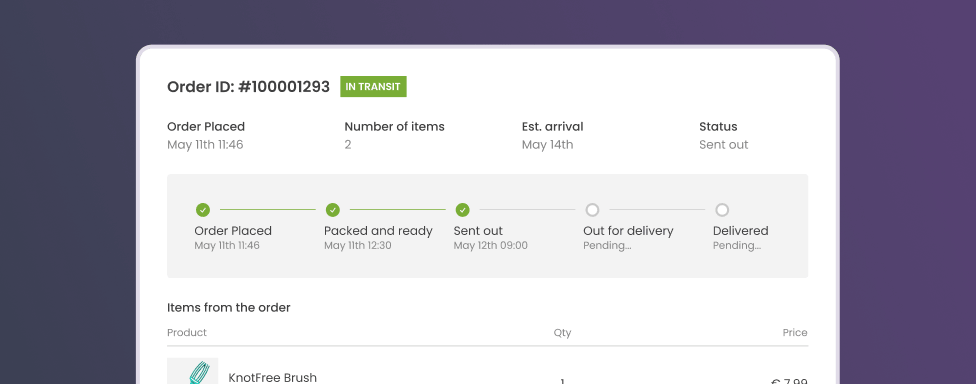
A well-designed tracking experience should translate the operational language into understandable information. Instead of showing logistic terminology to customers, they should see clear milestones they can understand, such as:
- Preparing your order
- Packed and ready to ship
- On the way
and similar.
Combined with realistic delivery expectations and contextual updates, this creates a tracking experience customers can easily follow.
Delivery expectations vs delivery speed
Fast shipping has become a competitive standard in eCommerce. But speed alone does not shape the complete experience. Expectation management matters just as well.
A package arriving two days later than promised leads to frustration, even if the total delivery time is relatively acceptable. On the other hand, a realistic estimate that arrives earlier than expected creates a positive impression.
Customers are generally tolerant of delays when communication is proactive and honest. What frustrates customers is uncertainty.
Delivery problems are UX problems
Delays and failed deliveries are unavoidable because no logistics system is perfect. What matters in those situations is how they’re handled from the user experience side. Many stores still approach delivery issues reactively – after the customer has reported a delay.
Such an approach often creates frustration and weakens the trust in the brand. On the other hand, if any issues are communicated early and explained clearly, customers are far more likely to understand when the delivery doesn’t go as planned.
The same applies to returns. A clear, transparent returns process can significantly reduce frustration when orders don’t meet expectations, especially in eCommerce. Well-designed returns management helps maintain customer trust even after a negative experience, turning a potential complaint into a smooth recovery moment.
Post-purchase experience is a retention strategy
Acquiring customers is expensive, which is why the post-purchase deserves more attention than it usually gets. Many brands invest heavily in acquisition channels and conversion optimization, but the relationship with the customer doesn’t end once the payment is completed. In many ways, that’s where long-term perception starts to form.

The delivery experience has a direct impact on future purchases, trust, reviews, and brand perception. A smooth and predictable post-purchase experience reinforces confidence and makes customers feel comfortable repeating a purchase. Unclear communication, missing updates, and delivery uncertainty, on the other hand, can quickly overshadow an otherwise positive shopping experience.
That’s why post-purchase UX should not be treated as an afterthought. It plays an important role in retention and directly influences how customers perceive the entire experience.